
A lot of patients come in and mention, almost in passing, that their jaw clicks when they chew, or that they wake up with headaches, or that their face just feels sore and tired by the end of the day. And when I ask how long that has been going on, the answer is usually some version of “a while.”
Most of them never thought to bring it up to a dentist. They figured it was stress, or tension, or just something they had to live with. Some had already seen their regular doctor about the headaches and nothing came of it.
What I tell them is this: those symptoms very often point to the jaw. And the jaw is absolutely something we can help with.
What Is TMJ?
TMJ stands for temporomandibular joint. You have two of them, one on each side of your face, right where your lower jaw connects to your skull. You can feel them if you place your fingers just in front of your ears and open and close your mouth. Those are your TMJs.
These joints do a lot of work. Every time you talk, chew, yawn, or swallow, they are moving. They are actually among the most used joints in the entire body. So when something is off with them, you tend to feel it.
The condition is often called TMJ disorder or TMD. It refers to a range of problems that affect the joint itself, the muscles around it, or both. The causes vary. It can come from clenching or grinding your teeth, an uneven bite, injury to the jaw, arthritis, or stress that causes you to hold tension in your jaw without realizing it.
Why Does It Cause Headaches?
This is the part that surprises most people.
The muscles that control your jaw are connected to muscles throughout your head, neck, and shoulders. When the jaw is under stress, those surrounding muscles tighten up too. Over time, that tension radiates outward. You feel it as a dull headache across your forehead, pain near your temples, soreness in your neck, or even earaches and ringing in the ears.
Because the pain shows up in places that seem unrelated to the jaw, people spend a lot of time looking for answers in the wrong places. They treat the headaches without ever addressing what is actually causing them.
If you have chronic headaches and you also clench your teeth or notice jaw soreness, there is a good chance the two are connected.
What Are the Symptoms?
TMJ disorder can look different from person to person. Some people have one or two of these symptoms, others have several.
Jaw clicking or popping. That clicking sound when you open or close your mouth is one of the most common signs. It happens when the disc inside the joint shifts out of position. Not all clicking is painful, but it is worth mentioning to us.
Jaw pain or soreness. This can be on one side or both. Some patients describe it as an aching feeling around the ear, cheek, or lower jaw.
Headaches, especially in the morning. Waking up with a headache is a classic sign of nighttime clenching or grinding. Your jaw has been working all night and the muscles are exhausted by the time you open your eyes.
Difficulty opening your mouth wide. If your jaw feels stiff or locks up, that is a sign the joint is not moving freely the way it should.
Teeth that are wearing down or chipping. Grinding puts enormous pressure on teeth over time. Flat, worn-down teeth are something we notice during a routine exam even before a patient mentions any jaw pain.
Earaches without an ear infection. Because the TMJ sits right next to the ear canal, inflammation in the joint can feel just like an ear problem.
Facial fatigue. Some patients describe their face feeling tired after eating, or even after a long conversation. That is the jaw muscles telling you they are overworked.
How Do We Diagnose It?
When a patient comes in with any of these symptoms, we do a thorough exam that goes beyond just looking at the teeth. We check how the jaw moves, listen for clicking or grinding, feel for tenderness in the muscles around the joint, and look at how the upper and lower teeth come together when you bite.
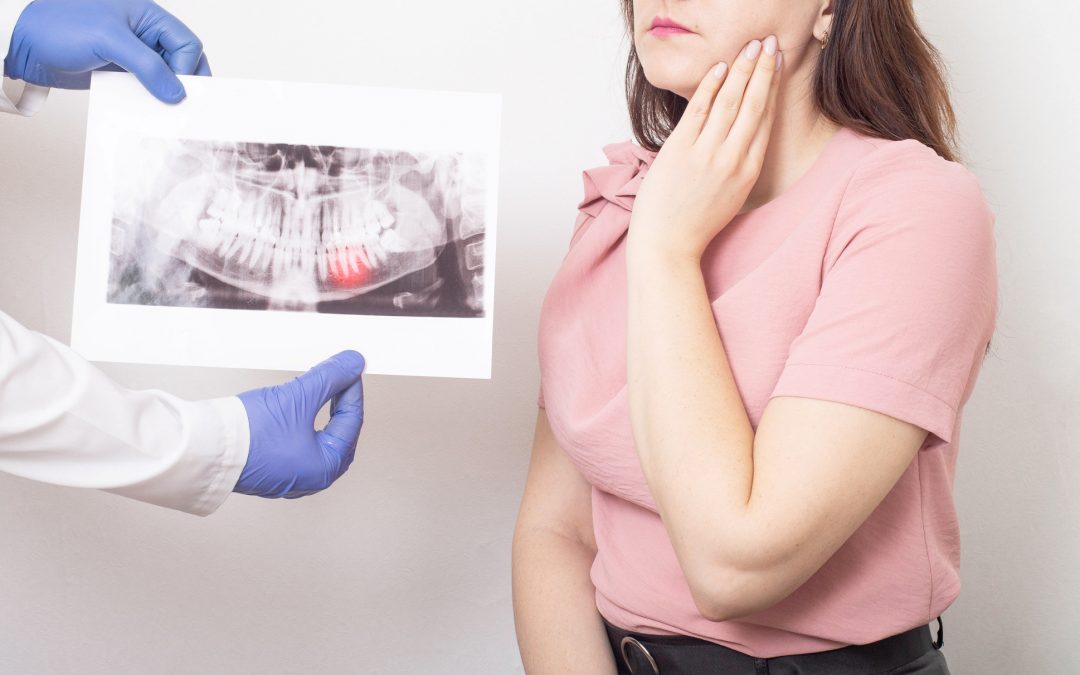
X-rays can help us see the joint itself and check for any bone changes. In some cases we may look at how the teeth are wearing to get a clearer picture of what is happening during sleep.
The goal is to understand not just where the pain is, but what is causing it. Treatment works best when we know the source.
What Does Treatment Look Like?
The good news is that most TMJ cases respond really well to conservative treatment. We are rarely talking about anything dramatic.
The most common starting point is a custom night guard. This is a clear appliance you wear while you sleep that cushions the teeth and takes the pressure off the joint. It does not stop you from clenching, but it prevents the damage and gives the muscles a chance to relax. A lot of patients notice a significant difference in their morning headaches within just a few weeks of wearing one.
We may also work with you on bite adjustments if the way your teeth come together is putting uneven stress on the joint. And for many patients, simple habits like being aware of jaw clenching during the day, avoiding hard or chewy foods for a period, and applying warm compresses to the jaw can make a real difference.
In more complex cases, we may refer out to a specialist or coordinate with your physician. But the large majority of what we see responds well to what we can do right here.
You Do Not Have to Just Live With It
Jaw pain, clicking, and tension headaches are common. But common does not mean normal, and it does not mean you are stuck with it.
If any of this sounds familiar, come in and let us take a look. A lot of patients are surprised to learn that the answer to something they have been dealing with for years was sitting right there in their mouth the whole time.
We see patients from all over San Marcos and North County, and TMJ treatment is something we handle regularly. Give us a call at (760) 597-9999 or book an appointment online. We are happy to help you figure out what is going on.