
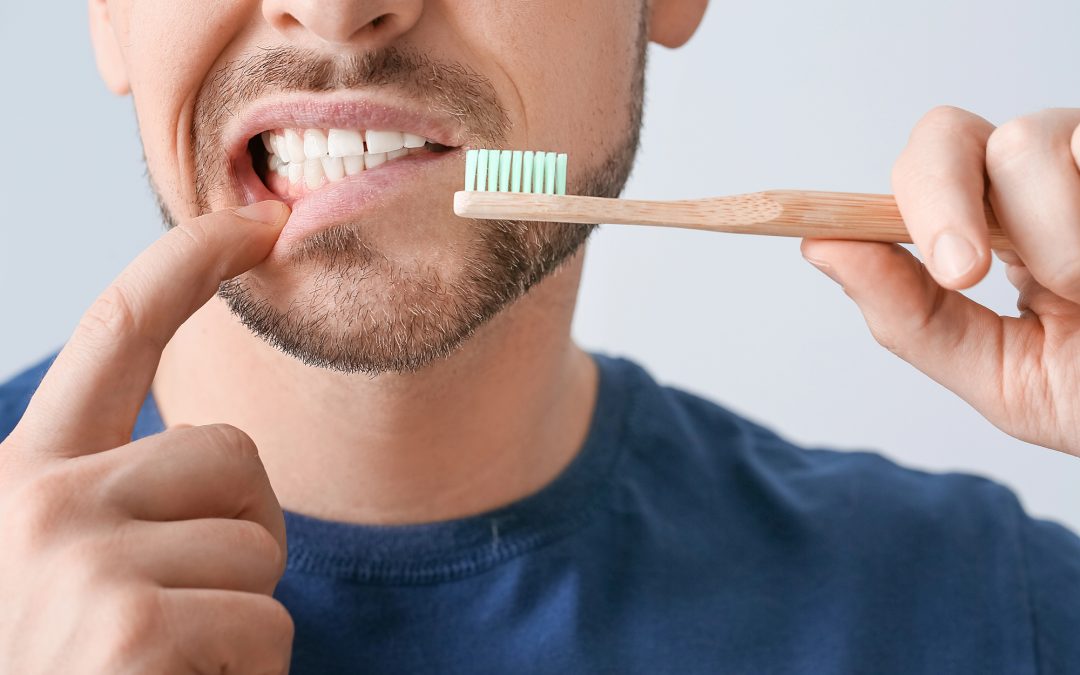
I hear some version of the same thing pretty often in my office: “My gums bleed when I brush, but I don’t think it’s a big deal.” Sometimes patients mention it almost as a side note, like they’re apologizing for bringing it up.
Here’s the thing. It is a big deal. Not in a scary way, but in a “let’s pay attention to this before it gets harder to fix” kind of way.
Bleeding gums are almost always a sign of gum disease. And gum disease is one of the most common health conditions I see, right here in San Marcos and across the country. The good news is that when we catch it early, it is very manageable. The hard part is that most people don’t know they have it until we point it out.
So let me walk you through what’s actually going on, what to look for at home, and what happens when you come in.
What Is Gum Disease?
Your gums, the bone underneath them, and the ligaments that hold your teeth in place are all part of what dentists call the periodontium. Think of it as the foundation that holds everything up.
Gum disease is what happens when that foundation gets attacked by bacteria. It starts with plaque, the sticky film that builds up on your teeth every day. If plaque isn’t removed, it hardens into something called tartar, or calculus. At that point, brushing alone can’t get rid of it. Only a professional cleaning can.
When tartar sits along and below the gumline, the bacteria in it irritate the gum tissue. Your gums get inflamed. They swell, they pull away slightly from the tooth, and they bleed when touched. That stage is called gingivitis, and the good news is it’s reversible.
If gingivitis isn’t treated, it progresses into periodontitis. That’s when the infection starts to damage the bone and tissue that support your teeth. Teeth can loosen. Gaps open up between teeth and gums. In serious cases, teeth can be lost.
That’s why catching this early matters so much.
Warning Signs to Watch For
Most people wait until something hurts before they call a dentist. I understand that. We’re all busy and a little discomfort can feel easy to push aside. But gum disease is sneaky. It usually doesn’t hurt, at least not at first.
Here are signs worth paying attention to:
Bleeding when you brush or floss. This is the most common one. Healthy gums should not bleed from normal brushing. If yours do, that’s your mouth telling you something is off.
Gums that look red, puffy, or swollen. Healthy gums are pink and firm. Inflamed gums look darker, redder, and feel tender.
Persistent bad breath. Not just morning breath. If you brush, floss, and use mouthwash and the bad breath keeps coming back, bacteria below the gumline could be the reason.
Gums that seem to be pulling back from your teeth. This is called recession. It can make your teeth look longer and expose the sensitive root surface underneath.
Teeth that feel loose or have shifted. By the time you notice this, the disease has already progressed. This is not the stage you want to reach.
If any of these sound familiar, please don’t wait to come in. I promise we’re not going to lecture you. We just want to help.
What Happens at Your Appointment
When you come in, we take a close look at your gums and measure something called pocket depth. The pockets are the spaces between your gums and your teeth. Healthy pockets measure 1 to 3 millimeters. When they’re deeper than that, it’s a sign that gum disease is present.
We also look at your x-rays to check for bone loss, which doesn’t show up during a visual exam alone.
If we find early-stage gum disease, a thorough professional cleaning is often all that’s needed. We remove the tartar buildup, give your gums a chance to heal, and work with you on better habits at home.
If the disease has progressed further, we may recommend a deeper cleaning called scaling and root planing. It sounds more intense than it is. We go below the gumline to clean the root surfaces of the teeth, which helps the gums reattach and heal properly. Most patients are surprised at how straightforward the process is.
What You Can Do at Home
The most important thing is brushing twice a day and flossing once a day. I know everyone has heard this before, but it truly does make a difference.
A few practical tips:
- Use a soft-bristled toothbrush. Hard bristles can actually irritate your gums further.
- Take your time. Two minutes is the goal. Most people spend less than a minute.
- Floss before bed, not just when something gets stuck. Floss clears the bacteria from between your teeth that your toothbrush cannot reach.
- If you have trouble with traditional floss, a water flosser can be a great alternative.
Here’s something that surprises a lot of patients. Gum disease has real connections to overall health. Research links it to heart disease, diabetes, and complications during pregnancy. I mention this not to alarm anyone, but because your mouth is part of your body. Taking care of your gums is taking care of yourself.
Don’t Wait on This
If your gums bleed, it does not mean you’re in trouble. It means your body is giving you an early warning, and that is actually a good thing. We can work with that.
At Family Dental of San Marcos, gum treatment is part of what we do for families every day. Whether you’re a longtime patient or you haven’t seen a dentist in a few years, we’ll meet you where you are without any judgment.
Give us a call at (760) 597-9999 or book an appointment online. Your gums will thank you.